
A Career and Formation Perspective for College Men
Every college guy reaches a season where summer starts to feel like a referendum on his future. You look around and everyone seems to be doing some impressive internships with fancy titles, research positions doing “real work”, or office jobs that sound adult and responsible. The kind of things that signal life momentum and career progress.
Wanting to move forward is not wrong. Scripture affirms diligence, growth, and preparation (Proverbs 13:4). What Scripture challenges is the assumption that the most impressive option is always the most formative one (1 Samuel 16:7). Somewhere along the way, we started asking “How can I pad my resume?” instead of “What will form me into the man God is calling me to be?”
An internship might help prepare you for a role, but it how does it shape the kind of man you are becoming? How is it developing your instincts, your character, or your ability to lead when things are unclear and the pressures rise?
Throughout Scripture, God’s priority is not how rapidly a person can advance their career, but their faithfulness. More important than one’s skill is their character. Your calling comes after your obedience. Learning responsibility reveals readiness rather than waiting for it.
Why Most College Internships Fall Short of Real Formation
Most internships are not bad. They are just limited because they are designed to be safe. Typically, in an internship, you’ll be expected to observe, assist, and learn the culture without carrying much weight. The National Association of Colleges and Employers shows that many undergraduate internships prioritize exposure over responsibility, especially early on. And if you think about it, that makes sense for most organizations because it protects them by lowering the risk an intern might pose if they carry any amount of real responsibility.
The hard truth is that this approach does very little to form men. That’s because formation does not happen in while in observation mode. Jesus was blunt about this when He said that faithfulness is proven in taking responsibility. “Whoever is faithful in little is faithful also in much.” Faithfulness is revealed when something depends on you.
Modern psychology echoes the same truth. Studies published through the American Psychological Association show that young adults develop emotional regulation, leadership confidence, and executive function fastest when responsibility is real and consequences affect others. Most internships intentionally delay that moment while camp proactively moves it forward.
Responsibility Builds Leadership Faster Than Observation
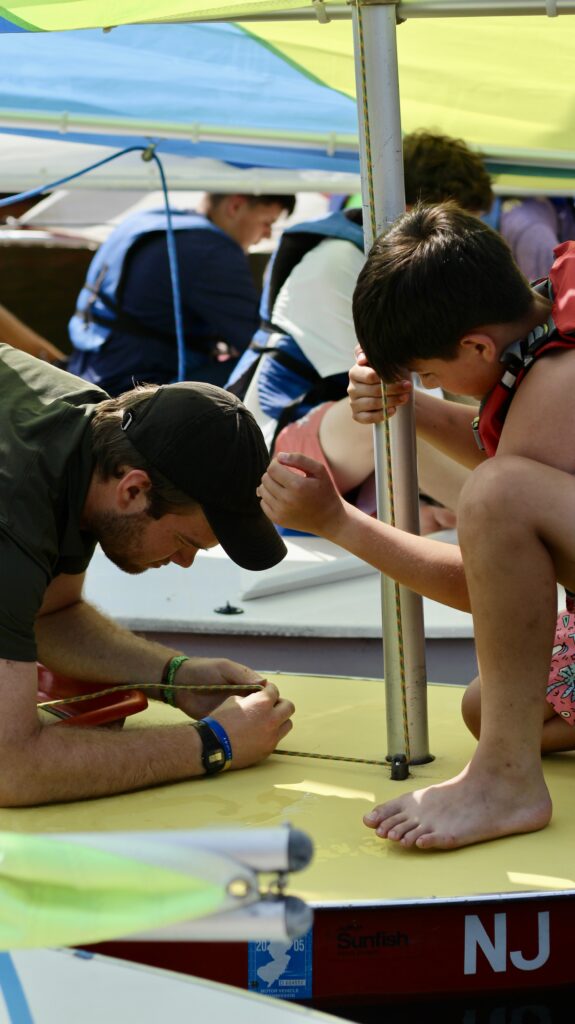
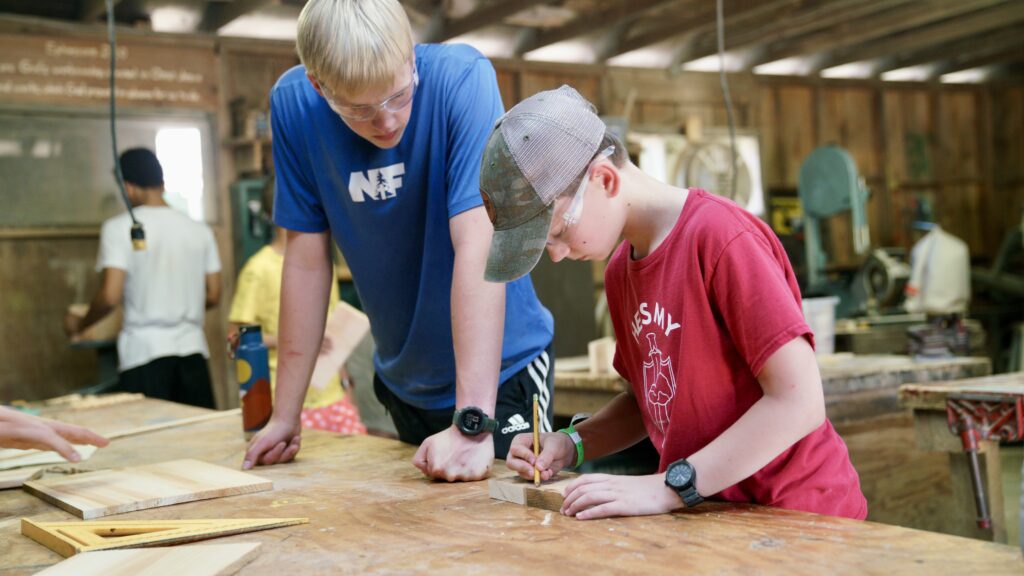
At summer camp, leadership is more than theory. It is lived out every day as you’re responsible for a group of campers. Instead of projects, you are responsible for people, their safety, growth and experience. You manage conflict, fatigue, morale, and expectations all at once, often without ideal conditions or perfect information.
That kind of pressure reveals things with in you. It exposes pride, humbles ambition, clarifies instincts, and shows you how you respond when patience runs thin and expectations remain high.
Scripture is filled with leaders formed this way. David was shaped in obscurity long before the crown, entrusted with responsibility before recognition ever arrived. Psalm 78 says God took David from tending sheep and used that unseen faithfulness to form a shepherd’s heart before giving him a kingdom. Responsibility was not a hurdle to leap toward leadership, but a necessary path taken. Camp follows that same pattern.

Employers Value Camp More Than You Think
When employers talk about leadership, they rarely mean charisma or confidence alone. Research from Gallup consistently shows that the strongest predictors of long-term success are reliability under pressure, emotional intelligence, integrity, and the ability to work well with others in imperfect conditions.
Proverbs reminds us that a good name is worth more than skill alone, and that integrity guides a man when talent eventually runs out. Camp accelerates the formation of those traits. You learn how to lead when you are tired and still expected to show up at bright and excited. You learn how to receive correction without defensiveness. You learn how to work under authority without losing initiative. You learn how to serve when no one is keeping score. Those lessons transfer to business, ministry, medicine, marriage, and fatherhood.
Meaningful Work Creates Vocational Clarity
Another thing internships often struggle to provide is meaning. Research from the Pew Research Center shows that young adults who engage in meaningful work early experience greater vocational clarity and long-term life satisfaction. They know what kind of work they want to do, what kind of environments they thrive in, and what compromises they are unwilling to make.
When Paul tells believers to work as unto the Lord, he reframes labor not as resume-padding but as worship (Colossians 3:23-24). Work done in service to others reshapes ambition and trains the desires of your heart. Camp work matters in a way that cannot be manufactured. You see growth up close. You see struggle. You see boys change slowly and imperfectly. You experience the quiet power of consistency and presence doing their work over time. That kind of work recalibrates how you define success (Ecclesiastes 2:11).
Theological Formation Through Lived Discipleship
Jesus did not disciple men in controlled environments. He called them into a shared life of work, service, correction, and mission. They learned by walking with Him, failing, being corrected, and being sent again before they felt ready.
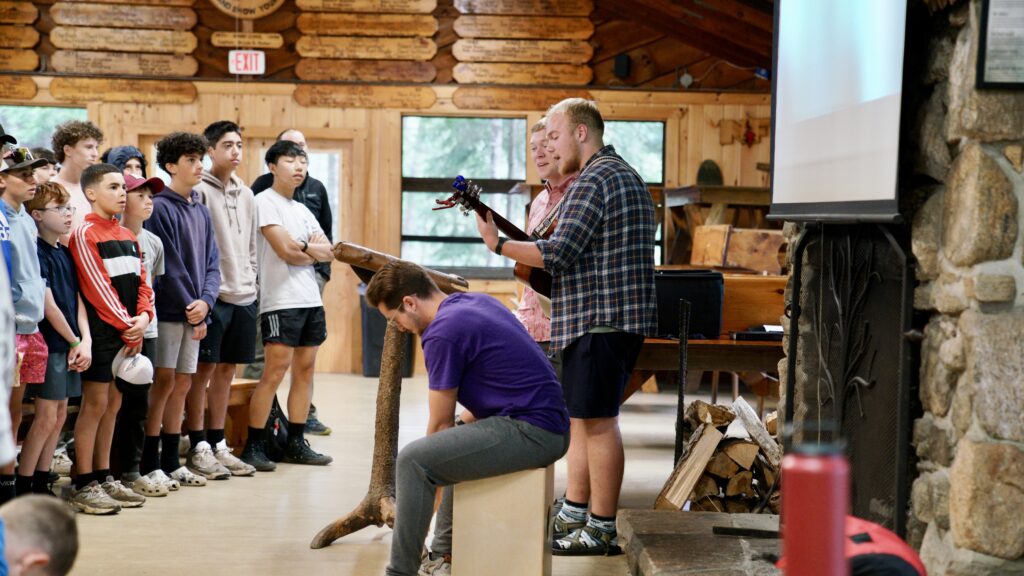
Christian formation has always been embodied (Mark 3:14). Faith is not absorbed through information alone. It is practiced through obedience, sacrifice, and trust. James writes that perseverance is produced through testing (James 1:2-4), not avoidance, and that maturity grows when faith is exercised under pressure. A Christian summer camp mirrors that rhythm. Life together. Work together. Worship together. Correction given and received. Growth that happens publicly and honestly. This is discipleship with weight.
Why Brotherhood Matters for Young Men
Men are not formed in isolation. Research from the Barna Group shows that young men grow spiritually at higher rates when faith is lived in community rather than consumed privately. Iron sharpens iron (Proverbs 27:17). Two are better than one. Growth happens in proximity.
Camp creates that environment by design. You work hard together. You worship together. You struggle and succeed together. Brotherhood forms not through talk, but through shared life and shared strain (Philippians 1:27). For many men, camp is the last season of life where intentional spiritual community is unavoidable. After college, it becomes optional, and therefore rare. That makes this season sacred ground.
Why Northern Frontier Is a Unique Place for a Young Man to Spend His Summer
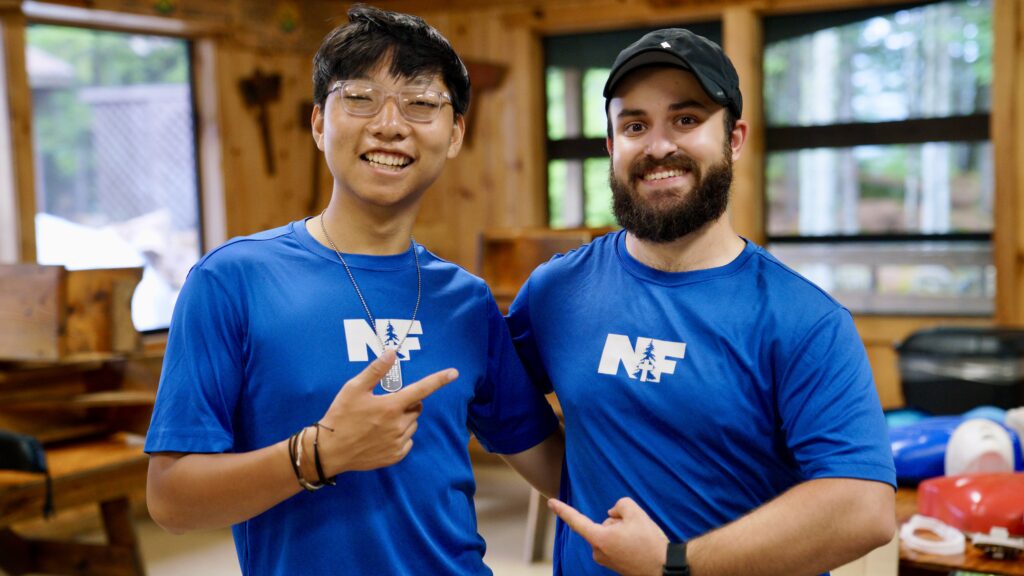
Northern Frontier is an all-boys Christian camp built on responsibility, brotherhood, and formation. Boys are treated seriously, which means staff are expected to lead seriously. Faith is not a side conversation. It is lived, practiced, and modeled daily through work, worship, conflict, and reflection (Titus 2:6-8).
Leadership development here is intentional, not accidental. Community is not optional. Discipleship is not outsourced. You can see this clearly in our mission and values and in how we approach faith and outdoor adventure as a formative tool rather than a backdrop. The wilderness setting reinforces all of this. Distraction fades. Simplicity sharpens focus. Faith becomes lived instead of theoretical. You can read more about that in why Northern Frontier exists and how we develop leaders on summer staff.
A summer at Northern Frontier will not give you a clean title or an easy story. It will give you responsilbity that’s real, clarity that confirms calling, a brotherhood bonded by shared purpose, and a deeper sense of who you are becoming.
Internships can wait. Formation should not.
⸻
References
American Psychological Association. Emerging Adulthood and Responsibility-Based Development.
Barna Group. The State of Young Adult Faith and Practice.
Gallup. Why Soft Skills Are the Real Hard Skills.
National Association of Colleges and Employers. Career Readiness Competencies.
Pew Research Center. The State of American Jobs.