
Most parents don’t struggle to find options of summer camp for boys. They struggle to decide which one actually fits their son.
And that makes sense. Everything looks good online. The photos are sharp and reviews look promise. The camp has confident language about growth, leadership, and unforgettable summers. But sending your son away, even for a week, is not a small thing and it shouldn’t feel casual. You’re booking more than an experience, you’re placing him in an environment that will shape him, whether it’s intentional or not.
Choosing a quality summer camps takes more than comparing brochures, scanning websites, or pouring over reviews. It comes from asking better questions. Below are seven that are worth taking seriously before you commit your son’s summer to any camp.
7. What kind of environment will my son be part of every day?
This one often gets overlooked, but it shouldn’t. Boys are incredibly sensitive to atmosphere. They may not have words for it, but they feel it. A steady environment calms a boy down. A chaotic one puts him on edge, even if the activities are fun.
How is a day at camp structured? Is there a rhythm to it, or is packed tight and rushed? Is there room for quiet as well as high energy? Is the tone calm and purposeful, or constantly reactive? Scripture talks about wisdom as something you walk in. Environment is that path. Your son will be walking it every day.
6. Who will be leading him?
Zip lines, climbing walls and water sports matter little next to who will be leading your son. A camp’s staff are for more important that a list of high-octane activities.
You son will remember the men who walked with him long after he forgets what he climbed or paddled. He will notice how they handle frustration, how they speak when they’re tired, how they correct without humiliating, and how they live their faith when it’s not a preprogrammed moment.
Ask how counselors are chosen and how they’re trained. Ask who is watching over the staff. A camp’s that takes leadership seriously will talk about mentorship, accountability, and formation, not just energy and enthusiasm. Paul didn’t just teach Timothy. He let Timothy watch his life. That kind of leadership shapes boys the most.
5. How does the summer camp for boys handle responsibility?
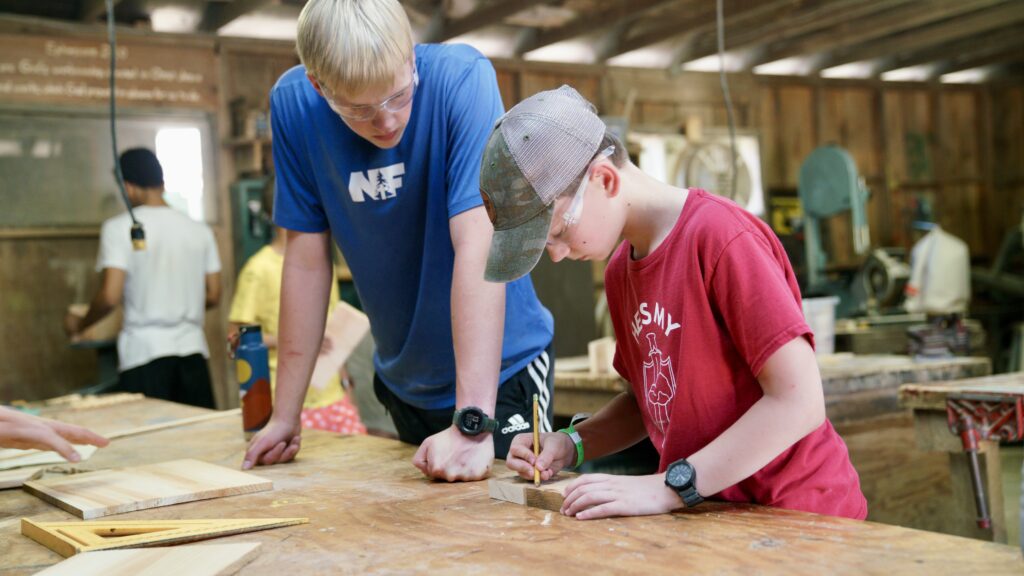
Boys don’t grow confident by being managed. They grow confident by being trusted. Responsibility, given at the right time and in the right measure, does something deep inside a boy’s soul. It tells him, You’re capable. You matter. You can carry more than you thought.
How are boys given real ownership? Are they simply moved from one activity to the next? Does that responsibility increase as boys get older? Is there a clear progression, or does everything stay the same year after year?
Dignity follows responsibility. Camps that understand that tend to grow boys well.
4. What role does faith play in daily life?
Faith can be loud or quiet. What matters is whether it’s consistent.
Ask how Scripture and prayer show up during the day. Are they woven into meals, conversations, and reflection, or confined to a single time slot? Formation rarely happens through intensity alone. It happens through repetition, presence, and habit.
Deuteronomy describe faith being passed down while walking, sitting, rising, and resting. Faith grows through living life alongside other believers, mentors who will live honestly and faithfully in front of your son.
Look for a camp where faith shapes the culture and shows up more than just on a schedule.
3. How does the summer camp for boys deal with conflict?
Conflict is a not a failure. It’s a classroom. Boys will clash, say the wrong thing, and test boundaries. The question isn’t whether conflict happens. It’s how adults respond when it does.
Healthy camps don’t rush past conflict or shame boys for struggling. They slow things down, help boys name what went wrong, and hold them accountable without crushing them
Ask how discipline works. Ask how counselors are trained to step into hard moments. Ask how parents are kept int he loop. You’ll learn a lot from those answers.
2. Will my son be challenged appropriately?
Growth requires friction. But friction has to be measured. Too little challenge and a boy checks out, but too much and he shuts down. Wise programs know how to stretch a boy without overwhelming him.
Some boys need to be invited forward. Others need permission to take one more step at their own pace. This is more than just labeling ages, but discovering where a boy is at and then walking with him toward where he needs to be.
Christ challenged his followers deeply, but never without relationship. Camps must strive to find that same balance.
1. What kind of growth does the summer camp for boys value most?
This is the question underneath all the others. Every camp will talk about activities and programs. But you want to know what king of young man they’re aiming to shape. Pay attention to what’s celebrated, what’s corrected, and what’s quietly expected.
Do they value humility? Courage? Faithfulness? Responsibility? Service?
Those things rarely come from hype. They grow slowly, through steady expectations and meaningful challenge. When you get a clear answer here, the rest usually falls into place.
Clarity Comes From the Right Questions
The right camp fit often feels less flashy and more steady. Parents tend to recognize it when they see it. Taking time to ask thoughtful questions brings that clarify sooner and helps ensure your son is placed in an environment that will serve him well, not just entertain him.
Summer is short. Formation lasts much longer.
If you’re exploring programs at Northern Frontier Camp, check out our FAQ which helps answer many of the questions mentioned above. But if you’d rather talk it through with a real person, we’re always glad to do that.
Boys are always becoming something. The environments we place them in help decide what that will be.